
Key safe boxes are the operational backbone of modern property management, enabling self-check-in for vacation rentals, secure key exchange for tenants, and efficient access for maintenance teams.
Key Takeaways:Key Safe boxes are the operational backbone of modern property management, enabling self-check-in for vacation rentals, secure key exchange for tenants, and efficient access for maintenance teams. Bulk purchasing from an OEM manufacturer like Tiger King Safe delivers volume pricing, consistent quality, and custom branding options that reduce per-property costs while standardizing operations across the portfolio. This guide covers capacity selection, security best practices, regulatory compliance, and wholesale sourcing strategies for property managers scaling their operations.
The short-term rental revolution has fundamentally changed how property managers think about physical access. In an era where Airbnb guests expect seamless self-check-in, where maintenance crews need access to dozens of properties daily, and where real estate agents manage keys for hundreds of listings, the humble key safe box has become an operational necessity rather than a convenience. For property management companies operating at scale, sourcing key safe boxes in bulk from a dedicated manufacturer is the most effective way to standardize access, reduce operational costs, and maintain security across a distributed portfolio.
The economics of bulk key safe purchasing are compelling. A single key safe purchased through retail channels costs $30-$80, while the same safe sourced in bulk (200+ units) from a manufacturer like Tiger King Safe costs a fraction of that amount. For a property management company managing 200 rental units, the savings from bulk purchasing alone can fund the entire key safe program with money left over. But the financial benefit is only part of the story - the operational standardization that comes from deploying identical key safes across every property in the portfolio reduces training time, simplifies maintenance, and eliminates the compatibility issues that arise when different properties use different access hardware.
The Role of Key Safes in Modern Property Management Operations
Key safes serve as the physical interface between property managers and the properties they manage. In a typical vacation rental operation, the key safe is the first point of contact for arriving guests and the last touchpoint before departure. Its reliability, ease of use, and security directly affect the guest experience, the property's review scores, and ultimately the property's revenue performance. A key safe that jams, runs out of battery, or is difficult to operate generates guest complaints, negative reviews, and support calls that consume the property manager's time and erode profit margins.
For long-term rental operations, key safes serve a different but equally important function. They enable maintenance crews to access properties for repairs and inspections without requiring the tenant to be present, reducing the scheduling friction that delays maintenance and creates tenant dissatisfaction. They allow property managers to conduct routine inspections efficiently, moving from property to property without the logistical burden of coordinating key pickup and return. And they provide a secure, auditable method of key management that supports the record-keeping requirements of professional property management licensing and insurance.
Real estate operations represent a third key safe application with distinct requirements. Real estate agents managing property listings need to provide secure access to showing agents, inspectors, appraisers, and prospective buyers without distributing physical keys. A key safe box bulk purchase for a real estate office typically focuses on larger-capacity models (27-48 keys) that can be installed at the office or at individual listing properties, providing centralized or distributed key management depending on the brokerage's operational model. The key safe becomes a productivity tool that reduces the administrative burden of key tracking and allows agents to focus on selling rather than managing logistics.
Capacity Selection: Matching Key Safe Size to Property Type
Selecting the right key safe capacity is the first and most important specification decision in a bulk purchase order. Too small, and the property manager runs out of slots for additional keys as the operation grows. Too large, and the safe costs more than necessary and takes up more wall space than the application requires. The right capacity depends on the property type, the number of access points, and the key management strategy employed by the property manager.
For single-family vacation rentals (Airbnb, VRBO, Booking.com), a 4-6 key capacity is the standard configuration. This accommodates the front door key, a back or side door key, a garage or storage key, and one or two backup keys held by the property manager or local co-host. The compact size of a 4-6 key safe makes it easy to install in a discreet location - under an eave, inside a meter box, or on a side wall near the entrance - where it is accessible to guests but not visible from the street. This concealment serves both security and aesthetic purposes, preventing the key safe from becoming an obvious target while maintaining the property's curb appeal.
For multi-unit apartment buildings and condominium complexes, larger capacity models in the 27-48 key range serve as central key management systems. Each unit's key is stored in a numbered slot, allowing property managers, maintenance staff, and emergency responders to locate and access any unit's key quickly. The Tiger King KS48 model provides 48 key slots in a wall-mounted cabinet with a combination lock, making it suitable for apartment buildings, office complexes, and mixed-use developments. The larger capacity reduces the number of key safes needed per building, simplifying installation and maintenance while providing a comprehensive key management solution in a single unit.
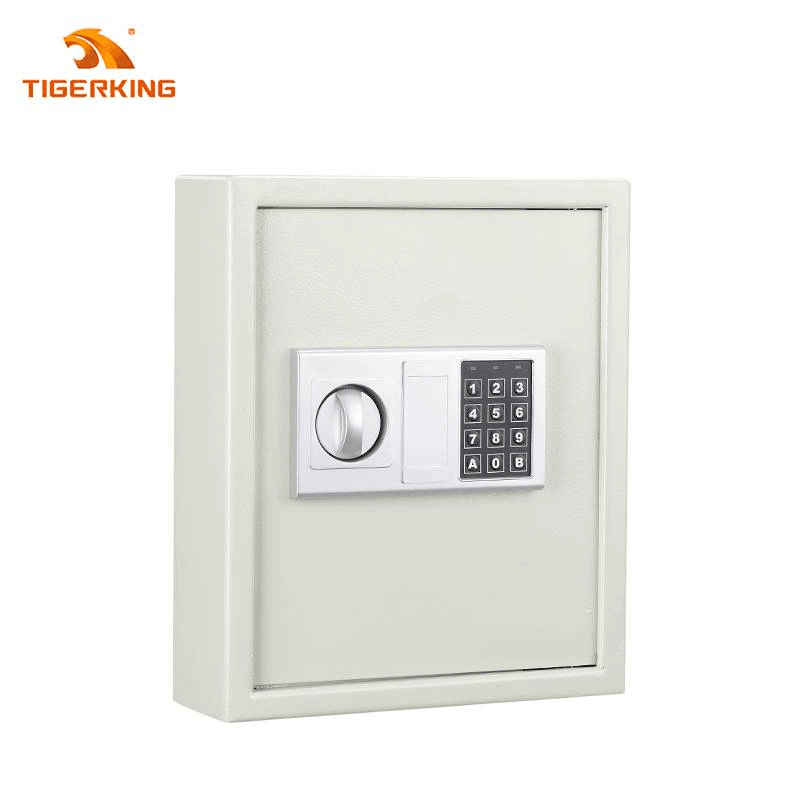
The Tiger King KS48 key lock box with 48-key capacity, designed for multi-unit property management, real estate offices, and centralized key management systems.
For real estate offices and property management headquarters, the KEY27 model offers a 27-key capacity that balances storage volume with wall space efficiency. The 27-key configuration is sufficient for most small-to-mid-size property management companies and real estate brokerages, accommodating keys for an entire office listing portfolio or a property management division's active inventory. The wall-mounted design keeps keys organized, visible, and accessible to authorized staff, eliminating the key management chaos that plagues offices using drawer-based or hook-based key storage systems.
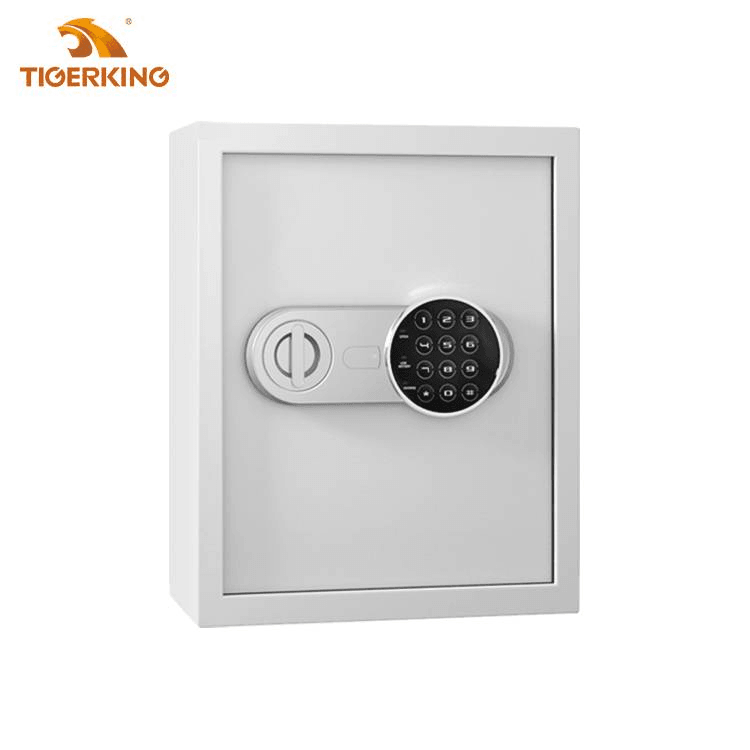
The Tiger King KEY27 key lock box with 27-key capacity, offering organized key management for real estate offices and mid-size property management operations.
Security Best Practices for Property Manager Key Safes
The security of a key safe system depends as much on operational practices as on the physical construction of the safe. A high-quality key safe with a weak code management protocol is less secure than a basic safe with rigorous code hygiene. Property managers deploying key safes across their portfolio should establish and enforce standardized security practices that address code management, physical installation, and access monitoring.
Code management is the most critical security practice. For vacation rental operations, the combination code should be changed after every guest checkout, with a new code generated for the next guest's check-in. This prevents former guests from returning to the property using the code they received during their stay. The code should be unique to each property - using the same code across multiple properties creates a vulnerability where a compromised code grants access to the entire portfolio. Avoid obvious codes (1234, 0000, the property address number, or the year) that can be guessed through social engineering or simple trial and error.
Physical installation affects the key safe's resistance to tampering and theft. The safe should be mounted on a solid surface - concrete, brick, or solid wood framing - using the manufacturer's recommended mounting hardware. Mounting on drywall, vinyl siding, or other weak surfaces allows an attacker to simply pull the safe off the wall, defeating the security purpose entirely. The mounting location should be accessible to authorized users but not easily visible from the street or public areas. Concealment is the key safe's primary security mechanism - a key safe that cannot be found cannot be compromised. For properties where outdoor concealment is difficult, indoor installation in a garage, utility closet, or covered porch provides additional security without sacrificing accessibility.
Access monitoring completes the security framework. Property managers should maintain a log of when codes are changed, who has been given access codes, and when the key safe was last inspected. This log serves both operational and security purposes - it helps identify patterns in access requests, supports dispute resolution if a guest claims unauthorized entry, and provides documentation for insurance claims if a security incident occurs. For property managers handling vacation rental regulations that require access documentation, this log is a compliance necessity, not an optional extra.
Wholesale Sourcing Strategy for Property Management Companies
Property management companies sourcing key safes wholesale face a unique set of requirements compared to retail or individual buyers. The order volume is higher (typically 200-1,000 units for a growing portfolio), the quality consistency requirement is more stringent (every safe must perform identically to avoid property-specific issues), and the branding opportunity is more valuable (custom-logoed key safes reinforce the property management company's professional image with guests, tenants, and vendors). These requirements make the case for direct OEM sourcing rather than retail purchasing or distributor relationships.
Tiger King's wholesale program for property management companies starts at 200 units, with volume pricing that reduces the per-unit cost by 40-60% compared to retail purchasing. The MOQ of 200 units aligns with the typical scale of a property management company managing a vacation rental portfolio or a mid-size apartment complex. For larger operations, volume tiers at 500 and 1,000 units provide additional discounts that further improve the unit economics. Annual supply agreements lock in pricing and guarantee production capacity, eliminating the risk of price fluctuations or stock shortages during the peak rental season when key safe demand is highest.
Custom branding options are a significant value-add for property management companies. Logo engraving on the safe body, custom-colored finishes that match the company's brand palette, and branded packaging that arrives ready for deployment across the portfolio all contribute to a professional, cohesive image that distinguishes the property management company from competitors using generic hardware. These customizations are available at the 200-unit MOQ, making them accessible to growing property management companies as well as established operations.
Lead time management is critical for property management companies operating on seasonal timelines. Key safes for summer vacation rental properties need to arrive and be installed before the booking season begins, not midway through. Tiger King's standard lead time of 20-30 days from order confirmation, combined with their export experience and shipping logistics, ensures that bulk orders arrive on schedule. For companies expanding their portfolio mid-season, expedited production options are available to meet urgent timelines. The key is planning the annual key safe procurement as part of the budget cycle, not as a reactive purchase when a new property is acquired.
Cost Analysis: Key Safes vs. Alternative Access Solutions
Property managers evaluating access solutions face a choice between key safes, smart locks, lockboxes with digital platforms, and traditional key exchange services. Each option has distinct cost, reliability, and operational characteristics that affect the total cost of ownership and the quality of the guest or tenant experience. Understanding these trade-offs is essential for making an informed procurement decision.
Key safes offer the lowest total cost of ownership among physical access solutions. The per-unit cost in bulk volumes ($15-$40 depending on capacity and features), combined with zero ongoing subscription fees, zero battery replacement costs (for mechanical models), and zero connectivity requirements, makes key safes the most economical choice for properties where smartphone-based access is not required or not practical. The operational simplicity of a combination lock - no app to download, no Wi-Fi to maintain, no firmware to update - reduces the support burden on the property management team and eliminates the technology-related access failures that plague smart lock deployments.
Smart locks offer a more sophisticated access experience but at significantly higher cost and complexity. The per-unit cost of a quality smart lock ($100-$300) is 3-10x higher than a key safe, and the ongoing costs (batteries, Wi-Fi connectivity, platform subscriptions) add $20-$50 per unit per year. Smart locks also introduce technology failure modes - dead batteries, lost Wi-Fi connectivity, app compatibility issues, firmware bugs - that key safes do not have. For property managers managing budget-conscious vacation rentals or properties in areas with unreliable internet connectivity, key safes provide a more reliable and more economical access solution.
The hybrid approach - using key safes as the primary access method with smart locks as a premium option for high-value properties - allows property managers to optimize cost and experience across their portfolio. Properties that command premium nightly rates can justify the higher cost and sophistication of smart locks, while standard properties benefit from the simplicity and economy of key safes. This tiered approach matches the access technology to the property's revenue potential, ensuring that the access solution's cost is proportional to the income it enables.
About the Author
James Chen is a Senior Security Industry Analyst and SEO Content Strategist at Tiger King Safe. With over 10 years covering the security equipment manufacturing and global trade sector, James specializes in B2B sourcing strategy, OEM/ODM evaluation frameworks, and market intelligence for physical security products.
LinkedIn | Facebook | YouTube | X
Frequently Asked Questions
What is a key safe box and how does it work for property management?
A key safe box is a wall-mounted or surface-mounted steel container designed to securely store physical keys for authorized access. In property management, key safes are installed at rental properties to allow guests, tenants, maintenance workers, and property managers to access keys without requiring in-person key handoffs. The property manager sets a combination code, shares it with the authorized user for a specific time window, and changes the code after each use or rental period. This eliminates the logistics of key exchange, reduces the risk of lost or copied keys, and enables 24/7 self-check-in for vacation rental guests.
What capacity key safe should property managers choose?
Key safe capacity should match the property type and access requirements. For single-family vacation rentals, a 4-6 key capacity is sufficient to hold the front door key, garage key, mailbox key, and backup keys. For multi-unit apartment buildings, larger capacity models (27-48 keys) serve as central key management systems. Real estate offices typically need 27-48 key capacity models to manage listings across their portfolio. Tiger King offers key safes in both configurations, with the KS48 model providing 48-key capacity for large portfolios and the KEY27 model offering 27-key capacity for mid-size operations.
How do property managers secure key safes against unauthorized access?
Key safe security depends on code management practices as much as physical construction. Best practices include changing the combination code after every guest checkout, using unique codes for each property, and avoiding easily guessed codes. Physical security is enhanced by selecting key safes with hardened steel construction, anti-pry features, and concealed mounting bolts. The safe should be mounted on a solid surface (concrete, brick, or solid wood) rather than drywall or vinyl siding. Tiger King key safes feature reinforced steel bodies and anti-tamper mounting systems designed to resist common forced-entry techniques.
What is the MOQ for bulk key safe orders?
Tiger King's minimum order quantity for bulk key safe purchases is 200 units, with volume pricing tiers at 500+ and 1,000+ units. For property management companies standardizing key safes across their portfolio, an annual supply agreement provides the most favorable pricing and guarantees availability during peak rental seasons. Custom branding (logo engraving, branded packaging) is available at MOQ 200 units. Lead times for standard key safe models are 20-30 days from order confirmation.
Are key safes compliant with vacation rental regulations?
Key safes are generally compliant with vacation rental regulations in most jurisdictions, as they provide a documented, auditable method of property access. However, regulations vary by municipality, and property managers should verify local requirements. Some jurisdictions require access logs or concealed mounting. Tiger King key safes are designed with regulatory compliance in mind, offering models with audit trail features for jurisdictions that require access documentation.
Can key safes be integrated with smart home or property management systems?
Modern key safes can be integrated with property management platforms through Bluetooth, Wi-Fi, or proprietary connectivity protocols. Smart key safes allow property managers to change codes remotely, generate temporary codes, and receive access notifications. However, smart key safes are more expensive and require reliable Wi-Fi connectivity. For property managers evaluating smart versus traditional key safes, the decision should be based on portfolio size, turnover frequency, and internet availability at each property.
Related Reading
- Browse Tiger King's Full Key Safe Collection
- Tiger King Wall Safe Solutions