
TL;DR
- Mechanical and electronic locks have different reliability profiles — the right choice depends on the application, the access pattern, and the maintenance expectation.
- Mechanical combination locks are the most reliable for long-term unattended storage because they have no electronic components, no battery dependency, and no firmware updates.
- Electronic locks (keypad, biometric, RFID) offer faster access and more convenience, but introduce a battery dependency and electronic component failure modes.
- For OEM stocking decisions, the fingerprint safe range of Tigerking products demonstrates the electronic lock design verified for field deployment.
- For multi-user access, the touch screen keypad safe configuration demonstrates the keypad electronic lock with multi-user code management.
- For how fingerprint safes work, the biometric sensor technology is the differentiating element compared to standard electronic keypads.
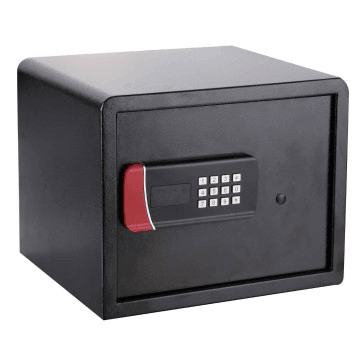
Tigerking H30NE Fingerprint Safe — electronic biometric lock with field-verified reliability for residential and commercial applications.
The Insurance Claim That Made Me Re-Think Lock Reliability Data
Last winter, a North American insurance adjuster contacted us with a question that crystallized the difference between mechanical and electronic lock reliability in a way that no data sheet could. The adjuster was processing a claim for a commercial safe that had failed to open during a documented burglary attempt. The thieves had given up and left the safe empty. The claim was for the contents that would have been inside if the safe had opened, and the insurance company was questioning whether the safe met the policy's security requirement.
The safe in question was a residential-grade fire-resistant safe with an electronic keypad lock. The lock had failed during the burglary attempt — not because the thieves had defeated it, but because the battery had depleted at some point during the 14 months since the safe was installed, and the user had not detected the low-battery warning. The lock was unresponsive to the user's code and the backup key was not available. The police report documented the lock failure as the reason the burglary attempt was unsuccessful — which meant the safe had, in a perverse sense, performed its security function by failing to open.
But the insurance company wanted documentation that the safe met the policy's electronic lock specifications, and the documentation could not be produced because the lock had failed in a way that did not match the manufacturer's published reliability data. The policy required a lock with documented battery monitoring and user notification, and the lock in question had a battery monitor that was not visible to the user until the battery was already depleted.
The adjuster's question was not about which lock type is better. The question was about which lock type has the documented reliability data that satisfies insurance underwriters. Mechanical locks have the long-term reliability data because they have been in service for decades. Electronic locks have the convenience data but the long-term reliability data is still being accumulated. For commercial applications where the insurance documentation is part of the specification, the lock technology choice is constrained by the available documentation.
Tigerking has been manufacturing safes and security equipment for over three decades. The mechanical vs electronic lock decision is one of the most common inquiries we receive from distributors and end users, and the right answer depends on the specific application, the access pattern, and the documentation requirements. This article is the framework I share when evaluating the lock technology choice for a specific installation.
The Mechanical Lock Reliability Profile: Decades Of Field Data
Mechanical combination locks have the deepest reliability data set in the safe industry because the technology has been in service for over a century. The combination lock mechanism — three or four rotating wheels with a spindle that engages the bolt extension — has been refined over decades to deliver consistent performance with minimal maintenance.
The reliability profile of a quality mechanical combination lock is characterized by a long mean time between failures (MTBF) measured in decades, a low annual failure rate measured in parts per million, and a service life measured in years of normal use. The combination mechanism itself has no electronic components, no battery dependency, and no firmware to update. The mechanism is purely mechanical, which means the failure modes are mechanical — wear on the combination wheels, wear on the spindle, wear on the bolt extension mechanism.
For commercial safe applications where the lock is used multiple times per day, the mechanical lock service life is typically 10 to 25 years before the combination mechanism requires service or replacement. For residential applications where the lock is used a few times per week, the service life can extend beyond 25 years. The fire-rated and Gun Safe locks in the Tigerking catalog are designed for service lives consistent with the safe body's rating, which is typically 20+ years.
The mechanical lock reliability data is also the most defensible from an insurance and regulatory perspective. The Underwriters Laboratories (UL) listing for the TL-15 and TL-30 safe categories is based on mechanical combination lock performance, and the UL data on lock reliability is incorporated into the safe's certification. For commercial applications where the insurance documentation matters, the UL-listed mechanical lock is the safest specification.
The Electronic Lock Reliability Profile: Convenience With Battery Management
Electronic locks — keypad, biometric, RFID — offer faster access and more convenient operation than mechanical locks, but introduce a different reliability profile. The electronic lock has electronic components (microcontroller, sensor, motor or solenoid), a battery dependency, and firmware that may need to be updated over the lock's service life.
The reliability profile of a quality electronic lock is characterized by a moderate MTBF (typically 5 to 10 years for the electronics, with the motor or solenoid being the primary wear component), a battery life of 1 to 5 years depending on the lock design and usage pattern, and a service life that depends on both the electronic components and the mechanical bolt extension mechanism.
The battery dependency is the primary operational risk of electronic locks. When the battery depletes, the lock becomes unresponsive to the user's input. Most quality electronic locks include a low-battery warning that signals weeks before the battery is fully depleted, allowing the user to replace the battery before lockout. The lockout risk after full battery depletion is the primary operational risk of electronic locks, and the user must have a backup key or backup access method.
The electronic lock reliability data is more limited than the mechanical lock data because the technology has been in widespread service for a shorter period. The Tigerking engineering team has been tracking electronic lock field performance for over a decade, and the data shows that the modern electronic lock with proper battery management is reliable within the design service life. The data does not yet span the full 25-year service life of a comparable mechanical lock.
The Failure Mode Comparison: What Breaks And When
The failure mode comparison is the most useful reliability data for buyers evaluating lock technology. Mechanical locks have a small number of failure modes, all of which are gradual and predictable. The combination wheels wear over thousands of cycles, the spindle wears over many more cycles, and the bolt extension mechanism wears over the longest cycle count. The user typically has months of warning before the lock fails — the combination dial becomes harder to turn, the bolt extension becomes intermittent, or the lock requires multiple dialing attempts to open.
Electronic locks have more failure modes, some of which are sudden and inconvenient. The battery can deplete without warning, the electronic component can fail on the next use, the firmware can develop a bug that requires a reset, or the motor or solenoid can fail mid-cycle. The user has less warning before the lock fails, and the failure mode is typically a complete lockout rather than a gradual degradation.
For applications where the lockout risk is critical (commercial high-security, gun safe for self-defense, document storage for compliance), the mechanical lock has the advantage of the predictable warning period. For applications where the convenience and access speed matter more than the lockout risk (residential document storage, jewelry storage in a low-risk environment), the electronic lock has the advantage.
For the Tigerking fingerprint safe line, the electronic lock is paired with a backup key access method that allows the user to bypass the electronic lock in the event of a battery depletion or electronic failure. The backup key is the operational risk mitigation that makes the electronic lock acceptable for the applications where the convenience is worth the lockout risk.
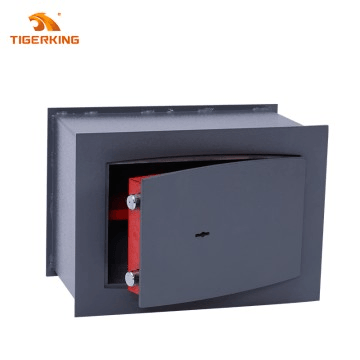
Tigerking LSDW-25K wall safe — electronic lock with backup key access method for residential document storage.
The Attack Resistance Profile: Physical Security Beyond The Lock
The attack resistance profile is the dimension where the lock technology choice matters most for the safe's overall security. The lock is the access control, but the safe body, the bolt work, and the door construction determine the actual physical security. A high-security lock on a low-security safe is a security theater — the attacker will go through the body, not the lock.
For mechanical combination locks, the attack resistance is determined by the combination wheel design, the manipulation resistance (the lock's resistance to manipulation by feel), and the drill resistance of the lock housing. Quality UL-listed mechanical locks have published manipulation resistance ratings that are tested under the UL standard.
For electronic locks, the attack resistance is determined by the electronic lock's resistance to direct electronic attack (which is generally high for modern encrypted locks), the bypass resistance (the resistance to mechanical bypass methods that exploit the electronic lock's mechanical interface), and the drill resistance. The electronic lock's resistance to electronic attack is typically higher than the mechanical lock's resistance to manipulation, but the electronic lock's mechanical interface can introduce new bypass vulnerabilities.
For commercial Gun Safes and high-security applications, the lock technology choice should be made in conjunction with the safe body's security rating. The UL TL-15 and TL-30 categories specify the safe body's resistance to attack, and the lock is one component of the overall security. The lock technology choice should match the safe body's rating — a UL TL-30 safe with a low-end electronic lock does not achieve the TL-30 rating because the lock is the weak point.
The Access Pattern Consideration: How Often And How Fast
The access pattern is the operational dimension that drives the lock technology choice for most applications. For applications where the safe is accessed a few times per week (residential document storage, jewelry storage), the access speed difference between mechanical and electronic locks is not significant. For applications where the safe is accessed multiple times per day (commercial cash handling, hotel safe, gun safe for self-defense), the access speed difference is the deciding factor.
A mechanical combination lock requires the user to dial through the combination sequence, which typically takes 5 to 15 seconds depending on the user's familiarity with the lock. An electronic keypad lock requires the user to enter the code, which typically takes 2 to 5 seconds. A biometric lock requires the user to present the fingerprint, which typically takes 1 to 3 seconds. The access speed difference is most significant for the multi-user access pattern where multiple users access the safe throughout the day.
For the Tigerking touch screen keypad safe line, the multi-user code management is the key feature that supports the commercial access pattern. The administrator can set up to 30 user codes with individual access permissions, and the access log records each entry with the user code and the timestamp. The access pattern is fully trackable, and the user management is centralized. The mechanical lock cannot deliver this multi-user functionality without an external mechanical code management system.
The Environmental Tolerance: Temperature, Humidity, And Dust
The environmental tolerance is the dimension where mechanical and electronic locks perform differently across application environments. Mechanical locks have a wider operating temperature range because the mechanical components are not affected by temperature extremes beyond the material limits. Standard mechanical locks operate reliably from below freezing to above 50°C without modification.
Electronic locks have a narrower operating temperature range because the battery and the electronic components have temperature limits. Standard electronic locks operate reliably from approximately 0°C to 50°C. High-temperature or low-temperature environments require specialized electronic locks with extended temperature components, which are more expensive and have a shorter service life.
Humidity and dust are the second environmental variable. Mechanical locks are largely unaffected by humidity and dust, with the only requirement being occasional lubrication of the moving parts. Electronic locks can be affected by humidity and dust in the keypad or sensor area, with the effect ranging from intermittent false readings to complete lock failure. The IP rating of the electronic lock's input area is the relevant specification for humidity and dust tolerance.
For applications in extreme environments (unheated warehouses, outdoor storage, marine environments), the mechanical lock has the environmental tolerance advantage. For applications in climate-controlled environments (offices, residential installations, commercial interiors), the electronic lock has the convenience advantage without the environmental penalty.
The Regulatory And Insurance Documentation: Which Lock Type Has The Paperwork
For commercial applications where the regulatory documentation and insurance compliance matter, the lock technology choice is constrained by the available documentation. The UL listings for high-security safes (TL-15, TL-30, TRTL-30) are based on mechanical combination locks, and the UL documentation for these listings is well-established. The equivalent electronic lock listings (UL-listed electronic locks for high-security applications) are more recent and the documentation is less standardized.
For commercial applications where the insurance documentation requires a specific lock type or lock rating, the lock technology choice is constrained by the available certifications. The UL listings and the BSI Group European standards provide the documentation framework for commercial safe certifications.
For residential applications, the regulatory and insurance documentation is less stringent. The lock technology choice is driven by the user's preference for convenience versus long-term reliability, and the documentation requirements are typically limited to the manufacturer's published specifications and warranty terms.
The National Institute of Standards and Technology (NIST) provides the technical framework for biometric lock performance testing through the NIST biometric standards program. The ASIS International provides the security industry standards for commercial safe installations. The Intertek and SGS third-party test labs provide the certification testing services for both mechanical and electronic lock technologies.
The Total Cost Of Ownership: Lock Cost vs Lock Service Life
The total cost of ownership comparison between mechanical and electronic locks is more nuanced than the unit price comparison. Mechanical locks have a higher unit cost but a longer service life, so the annual cost is typically lower. Electronic locks have a lower unit cost but a shorter service life, so the annual cost is typically higher.
For a commercial safe with a 20-year service life, the mechanical lock's longer service life and lower annual cost make it the lower total-cost option. For a residential safe with a 10-year service life, the electronic lock's lower unit cost may make it the lower total-cost option, especially if the user's convenience is worth the lockout risk.
The total cost of ownership also includes the maintenance cost over the service life. Mechanical locks require periodic lubrication and occasional combination wheel service. Electronic locks require periodic battery replacement and occasional electronic component replacement. The maintenance cost is similar between the two options, but the maintenance access is different — mechanical lock maintenance is typically performed by a locksmith, while electronic lock maintenance is typically performed by the user (battery replacement) or by a specialized safe technician.
For commercial applications where the lock maintenance is performed by a third-party service provider, the maintenance cost is the same and the technology choice is driven by the access pattern and the documentation requirements. For residential applications where the lock maintenance is performed by the user, the technology choice is often driven by the user's comfort with the maintenance task.
The Selection Decision Framework: Which Lock For Which Application
For B2B buyers, security consultants, and end users evaluating the lock technology choice for a specific safe installation, the following decision framework provides a starting point. The framework is based on the most common application categories and the lock technology that best matches each.
- Residential document storage, low access frequency: Mechanical lock. The long-term reliability and minimal maintenance match the low access frequency and the long service life of the safe.
- Residential jewelry or valuables storage, occasional access: Either technology. The mechanical lock offers the long-term reliability; the electronic lock offers the convenience. The choice is the user's preference.
- Residential gun safe, self-defense access: Biometric lock. The fast access in a self-defense scenario is the primary requirement, and the biometric lock delivers the fastest access with the backup key as the lockout mitigation.
- Commercial cash handling, multi-user access: Electronic keypad lock with multi-user code management. The access pattern rewards the faster access, and the multi-user code management is essential for tracking.
- Commercial high-security, UL TL-15 or TL-30: UL-listed mechanical lock. The UL listing is based on the mechanical lock performance, and the insurance documentation favors the mechanical lock.
- Hotel safe, multi-guest access: Electronic keypad lock with master code and guest code. The access pattern rewards the convenience, and the master code management is essential for the hotel operation.
Document storage in fire-rated safe, long-term unattended: Mechanical lock. The battery-free operation is essential for the long-term unattended storage, and the mechanical lock does not require periodic battery management.
The framework is not a rule. Specific situations may favor the opposite of the framework answer. The framework is a starting point for the lock technology conversation.
Closing Recommendation: Match The Lock To The Application, Not The Brochure
For B2B buyers evaluating the lock technology choice for a safe installation, the recommendation is to match the lock technology to the specific application, the access pattern, and the documentation requirements. The mechanical lock has the long-term reliability advantage for unattended storage. The electronic lock has the convenience advantage for frequent access. The choice is the user's or the buyer's based on the application priorities.
Tigerking produces both mechanical and electronic lock options across the safe product catalog, with the same quality system and the same field verification process. The fingerprint safe line provides the biometric lock demonstration, the touch screen keypad safe line provides the keypad electronic lock with multi-user code management, and the commercial and fireproof safe lines provide the UL-listed mechanical lock options for high-security applications.
For buyers who want to discuss the lock technology choice for a specific installation, the Tigerking engineering team is available for technical consultation. The fingerprint safe functionality and mechanism page on the Tigerking website provides additional technical detail on the biometric lock design. The engineering team can also provide detailed reliability data and field performance documentation for the lock technology options for specific commercial applications.
About the Author
James Chen is the Senior Security Industry Analyst & SEO Content Strategist at Ningbo Tigerking Safe Co., Ltd., covering the security equipment manufacturing and global trade sector for over 10 years. His work has been cited in Security Products Magazine and multiple industry procurement guides. He specializes in B2B sourcing strategy, OEM/ODM evaluation frameworks, and market intelligence for physical security products.
Facebook LinkedIn YouTube X