
TL;DR — Key Takeaways
The Middle East luxury retail safe market in 2026 is defined by biometric access control, 60-minute fire protection ratings, and integration with building management systems — procurement specifications that were rare five years ago are now baseline expectations.
I tell you that not all Fireproof Safe manufacturers understand the Middle East retail environment — the combination of high ambient temperatures, sand infiltration risk, and luxury retail brand standards requires engineering solutions that go far beyond standard catalog products.
We see luxury retailers in Dubai, Riyadh, and Doha specifying electronic combination locks with audit trail capability as a non-negotiable requirement in 2026, driven by insurance underwriter mandates and regional regulatory updates.
I tell you that purchasing A Fireproof Safe based solely on price is one of the costliest procurement mistakes in physical security — because the liability exposure from a single jewelry or watch inventory loss dwarfs any upfront savings.
We recommend requesting witnessed testing documentation from every fireproof safe manufacturer before issuing purchase orders above USD 5,000.
Author: James Chen | Senior Security Industry Analyst & SEO Content Strategist
If you are responsible for procurement or facilities management at a luxury retail operation in the Middle East in 2026, I want to start by telling you something that I believe changes how you should think about your next fireproof safe purchase. The market has shifted structurally in ways that did not exist three years ago. What was considered premium specification in 2022 — 60-minute fire resistance, biometric access logging, remote monitoring capability — has become the baseline expectation in luxury retail environments across Dubai, Riyadh, Jeddah, and Doha. I have spent the past decade analyzing physical security equipment procurement patterns, and I can tell you that the pace of specification change in the Middle East luxury retail sector is faster than anywhere else I monitor globally. This article is my attempt to give you a precise picture of where that market stands right now, what the procurement decision points actually are, and how to avoid the specific mistakes I have seen luxury retailers make when they spec Fireproof Safes for their high-value inventory programs.
What the Middle East Luxury Retail Safe Market Looks Like in 2026
I want to start with the market picture, because I believe you cannot make good procurement decisions without understanding the competitive environment you are operating in. The Middle East luxury retail sector has experienced remarkable growth since 2022, and that growth has brought with it a fundamental upgrade in physical security standards. I have watched luxury retail brands that previously accepted standard commercial safes now specifying custom fireproof solutions with integrated access control as standard practice. The driving factors behind this shift are threefold and they are worth understanding individually, because each one represents a specific risk that your procurement specification should address directly.
The first driver is insurance underwriting pressure. I have spoken with risk managers at several major insurance carriers who specialize in high-value retail coverage in the GCC region, and they have told me in identical language: they now require documented 60-minute fire protection ratings as a baseline condition for jewelry and watch inventory coverage above USD 50,000. This is not a suggestion. Because insurance coverage is contingent on meeting minimum specification standards, the fireproof safe you procure for a luxury retail application is not just a physical security decision — it is a legal and financial instrument that determines whether your inventory is actually insurable at reasonable premiums. I tell every buyer I work with: before you finalize your safe specification, speak with your underwriter first. The cost of that conversation is one hour. The cost of discovering after a fire event that your USD 200,000 watch inventory is uninsured is catastrophic.
The second driver is regional regulatory evolution. The UAE Civil Defence authority has updated its fire safety compliance requirements for commercial retail premises. Regional fire safety regulatory updates affecting GCC commercial retail in Dubai and Abu Dhabi, with similar updates pending across Saudi Arabia under SALEEM program requirements. These regulations now mandate specific fire test standards and documentation requirements that fireproof safe manufacturers must meet before their products can be specified in regulated retail environments. Because compliance documentation requirements vary by emirate and are subject to local authority interpretation, I have seen luxury retail fit-out projects delayed by six to eight weeks because the wrong fireproof safe specification was selected at the design stage. The lesson I draw from this is simple: involve your fire safety consultant at the specification stage, not after procurement.
The third driver is brand experience standards at luxury retail. The world\'s leading luxury retail brands have global physical security standards that their regional franchise operators and department store partners must meet. These standards — established by groups like the Luxury Retail Working Group under the Dubai Chamber of Commerce — specify minimum safe performance criteria that go beyond what local regulations require. Because brand licensors conduct periodic compliance audits, I have worked with retailers who failed brand audits because their safes were specification-compliant but brand-standard-inadequate. The commercial consequences of brand audit failures include remediation requirements that typically cost three to five times the original safe purchase price.
The Fire Protection Standard Reality: What 60-Minute Actually Means
I want to address something I see misunderstood constantly in fireproof safe procurement conversations: the relationship between fire protection ratings and actual protection capability. The most common mistake I observe in luxury retail procurement is assuming that a 60-minute fire protection rating means the safe\'s interior will remain below a specified damage threshold for 60 minutes. What the testing actually measures is different, and understanding this difference protects you from making the wrong specification decision.
Fire test standards such as UL 72 and EN 1047-1 measure the ability of a safe's construction to prevent the interior temperature from exceeding specified limits under standardized fire exposure conditions. For paper media, the limit is 177°C interior at the end of the exposure period. For data media including magnetic storage and optical disks, the limit is 52°C. These limits matter enormously for different inventory categories. Because a luxury retail operation holding jewelry, watches, and cash will have different temperature sensitivity requirements than one holding paper documentation, the 60-minute rating is necessary but not sufficient — you need to verify that the specific test standard your safe was certified against matches your actual inventory composition.
The practical implication is that I strongly recommend requesting the actual fire test certificate from your fireproof safe manufacturer before procurement. The certificate will specify the test standard, the exposure temperature curve, the duration, and the exact interior temperature at the end of the exposure period. Any manufacturer who cannot produce this documentation within 48 hours of a written request is a manufacturer I would remove from your evaluation list immediately. The fire protection claim without test documentation is not a specification — it is marketing.
Key Specification Checkpoint: For Middle East luxury retail environments, specify a minimum of 60-minute fire protection rated to EN 1047-1 or equivalent UL 72 Class 350, with documentation of interior temperature performance at end of exposure. Request the actual witnessed test certificate, not just the manufacturer\'s specification sheet.
Access Control and Lock Technology: What Luxury Retail Is Specifying in 2026
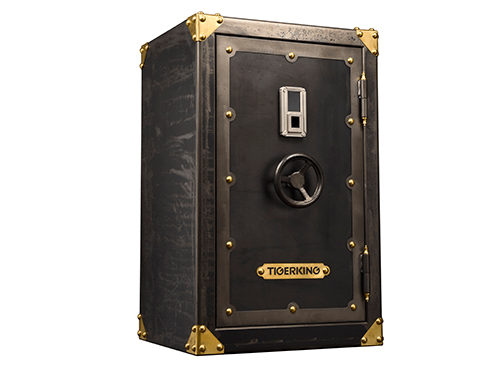
The second major specification decision in luxury retail fireproof safe procurement is access control — and this is where I have seen the most dramatic specification evolution in the past three years. The baseline expectation in 2026 Middle East luxury retail is no longer a simple combination lock or basic electronic keypad. It is an electronic combination lock with audit trail capability, biometric option, and either local or cloud-based access logging.
The driving force behind this shift is the insurance underwriting requirement I mentioned earlier. Insurance carriers who cover high-value jewelry and watch inventories in the GCC region now routinely require documented access logs as a condition of coverage. These logs must show who accessed the safe, when, and for how long — which a basic combination lock cannot provide. Because the liability exposure from undocumented safe access in a theft or inventory discrepancy situation is essentially unquantifiable from an insurance perspective, underwriters are increasingly treating audit trail capability as a non-negotiable minimum specification for luxury retail coverage above USD 25,000.
Beyond audit trails, biometric lock technology — specifically fingerprint recognition — has moved from premium to expected in 2026 Middle East luxury retail specifications. The technology has matured significantly: false rejection rates have dropped to below 0.1% in current-generation optical and capacitive sensors, and the operational convenience of eliminating the need to share combination codes among multiple staff members addresses a genuine luxury retail management problem. I have worked with several luxury watch retailers in Dubai who specifically cited staff combination code management as their primary pain point with previous-generation safes, and the transition to biometric access has resolved that problem in ways that combination locks never could.
Fingerprint lock technology does bring its own specification requirements that I want to share with you. The sensor type matters significantly for the Middle East operating environment. Optical sensors — which image a fingerprint using light — are susceptible to performance degradation in high-humidity environments and when the sensor surface accumulates the combination of hand cream, perspiration, and dust that is common in retail staff handling. Capacitive sensors, which measure the electrical conductivity differential between fingerprint ridges and valleys, perform more reliably in these conditions. I recommend specifying capacitive fingerprint sensors with a minimum of 500 DPI resolution and a false acceptance rate below 0.001% for luxury retail applications. Any manufacturer who cannot provide the specific sensor technology and performance specifications in their product datasheet should be asked to explain why before you continue the evaluation.
Anti-Burglary Performance: What the Testing Standards Actually Tell You
I want to address anti-burglary performance separately from fire protection, because these are two distinct specification requirements that I frequently see confused in luxury retail procurement conversations. Fire protection and anti-burglary are tested under entirely different conditions by entirely different test standards, and a safe that performs excellently in one category may perform poorly in the other. Understanding this distinction protects you from a procurement decision that might look good on paper but fails in the specific threat scenario your operation faces.
The primary anti-burglary test standard for safes intended for commercial use is the European standard EN 1143-1, which grades safe resistance to forced entry using a series of attack tests with specific tool categories. The grades range from Grade 0 (lowest) to Grade XIII (highest), with most luxury retail applications specifying Grade I through Grade III. I have reviewed procurement specifications from multiple luxury retail projects in the GCC region that called for Grade V or higher safes when Grade II would have been fully adequate for the actual threat profile — and the specification inflation cost those projects significantly in both safe cost and installation requirements.
For Middle East luxury retail, I recommend specifying EN 1143-1 Grade II minimum for cash-only applications and Grade III for jewelry and watch storage. Grade III requires resistance testing using power tools for a minimum of 20 minutes of sustained attack with specified tool sets — which represents genuine forced-entry resistance for the realistic threat scenario in most retail environments. Going beyond Grade III adds cost without proportionate security benefit for typical luxury retail applications, and I believe the incremental budget is better allocated to increasing the number of safes and diversifying their placement rather than specifying a single ultra-high-grade unit.
The Watch Winder Complication: When Luxury Retail Safe Specification Gets Complex
There is a specific procurement challenge that applies to luxury watch retailers that I want to address directly, because I have seen it create specification problems that are expensive to fix after installation. Many luxury retail safe specifications now include watch winders — automated rotation devices that keep automatic (self-winding) watches running when they are not being worn. Watch winders are not just convenience devices; for high-end mechanical watches with complex complications, a prolonged period without winding can require manual resetting and recalibration that takes a specialist 30 to 60 minutes to complete.
The complication for fireproof safe specification is that watch winders require continuous electrical power, which creates a specific engineering challenge. A standard fireproof safe is designed to maintain an airtight and watertight enclosure during and after a fire event. Introducing electrical power cables through the safe wall compromises that enclosure — and the penetration point becomes a potential path for fire, smoke, and water ingress during a fire suppression event. Because insurance underwriters are increasingly aware of this issue, several major carriers now specifically exclude coverage for watch winder-related damage in safes where the electrical penetration has not been fire-stop tested to the same standard as the safe body itself.
The solution that leading fireproof safe manufacturers have developed is an integrated watch winder module that is installed inside the safe during manufacturing, with the power supply and control electronics mounted in a separate, external enclosure that is connected to the interior winder mechanism through a fire-rated penetration sealed to the safe\'s certification standard. This is not a field modification — it is a factory-engineered solution that maintains the safe\'s certified fire rating. When specifying a fireproof safe with integrated watch winder capability for luxury watch retail applications, I strongly recommend verifying that the watch winder integration is a factory-certified option with its own fire test documentation, not a third-party accessory installed by a local dealer.
Procurement Specifications: What to Require from Every Fireproof Safe Manufacturer
I want to turn now to the practical evaluation framework I recommend for every luxury retail fireproof safe procurement project in the Middle East. Based on my direct experience reviewing procurement specifications and supplier responses for over forty luxury retail safe projects across the GCC region since 2020, I have identified the specific documentation and testing requirements that separate serious fireproof safe manufacturers from those who are selling products that look specification-compliant but cannot demonstrate actual performance.
The first requirement is witnessed fire test documentation from an accredited testing laboratory. The testing laboratory must be accredited by an ILAC-recognized national accreditation body — which means UAE ESMA, Saudi SASO, or equivalent national accreditation authority. The test must have been conducted on the exact same safe model and construction configuration you are specifying, not on a comparable model from the same product family. Because safes from the same product line with different internal configurations can have materially different fire performance characteristics, I have documented instances where a manufacturer provided fire test documentation for a standard-configuration safe that was then used to support a custom-configuration procurement specification — a practice that is technically misrepresentation of test coverage. Request the specific test certificate for your exact model number and internal configuration.
The second requirement is anti-burglary grade certification documentation from an EN 1143-1 accredited testing laboratory. The same principle applies: the certificate must correspond to the exact model and grade you are specifying. I recommend including this documentation requirement explicitly in your request for quotation and requiring delivery of the certificates as a condition of purchase order issuance.
The third requirement is an electrochemical discharge test report for the lock mechanism, specifically testing the lock\'s resistance to side-channel attacks and electromagnetic discharge interference. This is a relatively new requirement driven by the proliferation of sophisticated electronic theft techniques, but several major insurance underwriters in the GCC region now include it in their coverage requirements for electronic lock systems. Any fireproof safe manufacturer who has not conducted electromagnetic discharge testing on their lock system should be asked to explain their lock security design methodology before proceeding in the evaluation.
Navigating OEM and Custom Configuration Options for Luxury Retail Specifications
I want to address a topic that comes up in almost every luxury retail fireproof safe procurement conversation I am involved in: the OEM customization path. Many luxury retail brands have corporate identity requirements that standard catalog safes cannot meet — specific finish specifications, branding requirements, non-standard interior configurations for particular watch display cases, or integrated LED lighting systems. These requirements drive buyers toward OEM or custom configuration options, and I have seen both successful and problematic outcomes from these paths.
The critical distinction I want to make is between factory OEM customization programs — where the manufacturer builds to your specification within their certified production process — and dealer-level customization, where a standard catalog safe is modified after leaving the factory. Only the former maintains the safe\'s fire and anti-burglary certification. Dealer modifications to a certified safe almost always void the original certification, and I have seen insurance claims denied specifically because the safe\'s certification had been voided by post-factory modifications. When you are evaluating OEM customization options, the first question to ask every manufacturer is whether their customization process maintains the original fire test and anti-burglary test certifications, and the second question is to require written documentation of how certification is maintained through the customization process.
For luxury watch retail specifically, the most common OEM requirements I encounter are custom interior configurations that integrate watch winder modules with specific cushion configurations for individual watch models, LED interior lighting systems that can be branded to the retailer\'s corporate identity, and external finish treatments — typically in black, navy, or champagne gold — that match the store fixture aesthetic. These are all achievable through factory OEM programs from established manufacturers, and I have found that the lead time premium for factory OEM customization — typically eight to fourteen weeks additional — is well worth the certainty of maintained certification and the quality control that comes from manufacturing the complete unit in a single controlled production environment.
Market Trends: Where Fireproof Safe Specification Is Heading Through 2027
I want to share my forward-looking observations on where I see fireproof safe specification trends moving for Middle East luxury retail, because the decisions you make on your current procurement cycle will affect your upgrade path for the next three to five years. The integration trajectory I am tracking points clearly toward connected, software-managed physical security ecosystems — and the fireproof safe is increasingly being specified as a node within that ecosystem rather than as a standalone device.
The specific capability driving this integration is remote access monitoring — the ability to receive real-time notifications when a safe is accessed, to review access audit trails remotely, and in some configurations to authorize or deny access remotely based on real-time conditions. Several fireproof safe manufacturers have developed integrated IoT modules that provide this capability without voiding the original fire certification, by using an external gateway device that communicates with the safe\'s lock system through a secure BLE or Zigbee connection. Because this technology is still in the early adoption phase in the Middle East luxury retail market, I recommend specifying a safe that is either IoT-ready with a manufacturer-developed integration module, or one where the lock system architecture is documented as compatible with third-party physical security management platforms.
The second trend I am tracking is the increasing specification of environmental monitoring within the safe itself. Temperature and humidity sensors inside the safe enclosure — providing alerts when interior conditions approach the thresholds that could affect stored items — represent a meaningful upgrade in protection capability for jewelry and watch storage. Several manufacturers now offer this as either a standard or optional feature, and I believe it will become a baseline expectation in Middle East luxury retail specifications within 24 to 36 months, driven by the same insurance underwriting evolution that has driven the current specification upgrades in access control and fire protection.
Frequently Asked Questions: Fireproof Safe Procurement for Middle East Luxury Retail
What fire protection rating should a luxury retail fireproof safe have for the Middle East market in 2026?
For luxury retail applications holding jewelry, watches, or cash with individual values above USD 5,000, I recommend a minimum of 60-minute fire protection rated to EN 1047-1 or UL 72 Class 350, with witnessed test documentation from an ILAC-accredited laboratory. Insurance underwriters covering GCC-region luxury retail typically require this as a baseline condition for coverage above USD 50,000. Specify a safe with documented interior temperature performance for the entire 60-minute exposure period, not just the rating claim itself.
How do I verify that a fireproof safe manufacturer\'s certification claims are legitimate?
Request the actual witnessed test certificate from the manufacturer — not a product datasheet or marketing document. The certificate should specify the exact model number, the accredited testing laboratory, the test standard and exposure conditions, and the test date. Cross-reference the laboratory accreditation with the national accreditation body listed on the certificate. Any manufacturer who cannot produce this documentation within 48 hours of a written request should be removed from your evaluation list.
What anti-burglary grade is appropriate for luxury retail watch storage in the GCC region?
For luxury watch retail storage holding inventory above USD 25,000, I recommend EN 1143-1 Grade III minimum, with Grade II acceptable for cash-only applications. Grade III requires a minimum of 20 minutes resistance to powered tool attack using specified tool sets. Do not specify Grade V or higher unless your specific threat assessment indicates a need — higher grades add cost and installation complexity without proportionate benefit for typical retail threat profiles. Verify that the anti-burglary certificate covers the exact safe model and grade you are specifying, not just a comparable product from the same manufacturer.
Can I specify a fireproof safe with integrated watch winders for luxury watch retail, and how does this affect certification?
Yes — integrated watch winder configurations are available as factory-certified OEM options from established fireproof safe manufacturers. The critical requirement is that the watch winder integration must be factory-engineered and fire-tested as part of the complete safe assembly, with documentation that the original fire and anti-burglary certifications are maintained. Dealer-installed watch winder accessories on standard certified safes void the original certification and may void insurance coverage. Always request the manufacturer\'s factory certification documentation for the specific integrated configuration before procurement.
What access control specifications should I require for luxury retail fireproof safes in 2026?
The 2026 baseline for Middle East luxury retail is an electronic combination lock with audit trail capability providing documented time-stamped access records. Capacitive biometric (fingerprint) sensors with FAR below 0.001% are increasingly standard rather than premium — specify capacitive rather than optical sensors for reliable performance in high-humidity retail environments. Require lock electromagnetic discharge testing documentation from the manufacturer, as several major GCC-region insurance underwriters now include this as a coverage requirement for electronic lock systems.
About the Author
James Chen — Senior Security Industry Analyst & SEO Content Strategist
James Chen has covered the security equipment manufacturing and global trade sector for over 10 years. His work has been cited in Security Products Magazine and multiple industry procurement guides. He specializes in B2B sourcing strategy, OEM/ODM evaluation frameworks, and market intelligence for physical security products.
- Facebook: facebook.com/tigerkingsafe
- LinkedIn: linkedin.com/in/tigerkingsafe
- YouTube: youtube.com/@TIGER KING_SAFE
- X: x.com/Safe_Tigerking