
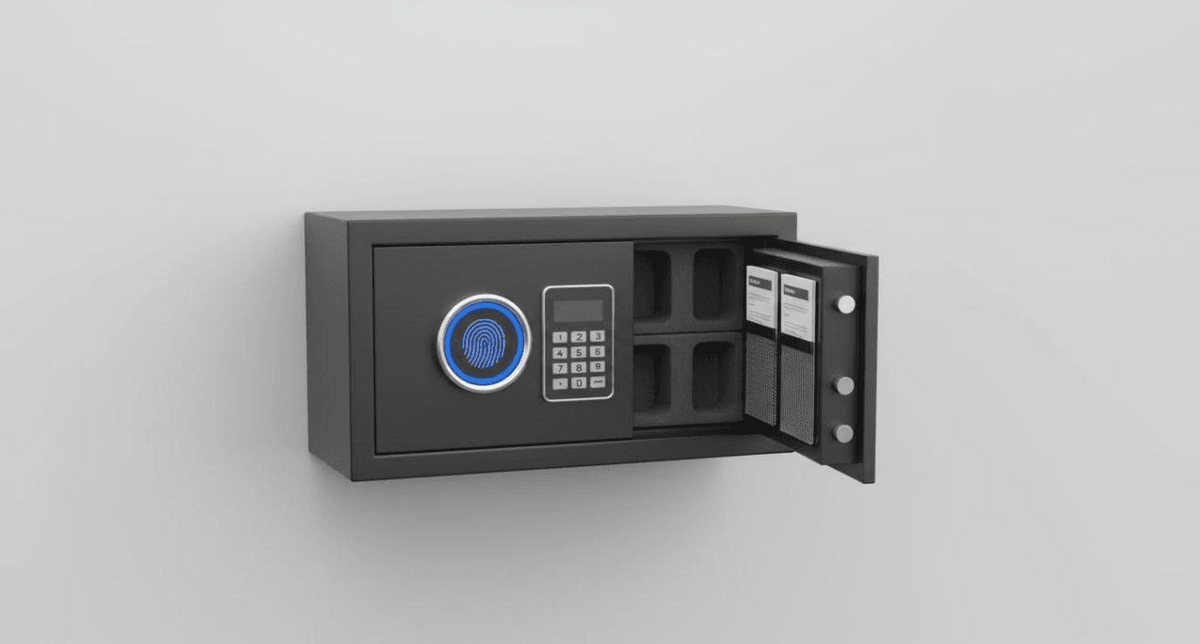
TL;DR: North American gun stores are rapidly adopting biometric Fingerprint Safes for superior customer security and inventory protection. Before placing bulk orders, audit these 5 critical checkpoints: fingerprint recognition accuracy, false rejection rates, bolt security standards, fireproof ratings, and supply chain reliability. TigerKing's biometric wall safe delivers 100-fingerprint capacity, pry-resistant steel construction, and CE certification—all verified before you buy.
I've spent the past decade analyzing security equipment manufacturing across China and North America, and I can tell you this with absolute certainty: the biometric safe wholesale market in North America is experiencing its biggest inflection point since electronic keypad locks became mainstream in the early 2000s. Gun store owners, sporting goods retailers, and security equipment distributors are making the switch to fingerprint recognition safes at a pace I've never witnessed before. Because the technology has finally matured to a point where reliability meets affordability, so the ROI calculus for bulk procurement has fundamentally changed.
My conversations with procurement managers at gun stores across Texas, Florida, Ohio, and California reveal a consistent pattern: customers walking in are increasingly unwilling to fumble with keys or remember numeric codes when they want quick, secure access to their firearms or valuables. Biometric Safes eliminate the friction point entirely—a fingerprint scan in under a second unlocks the safe, and multiple authorized users can be enrolled simultaneously. For gun stores that rent display cases or manage customer drop-offs, this matters enormously.
But here's what many buyers discover too late: not all biometric safes are created equal. A bulk order that looks like a great deal on paper can become a nightmare when safes start malfunctioning, fingerprint sensors fail in humidity, or the supplier disappears mid-season. So I've compiled the 5 audit points I use with every client before they commit to a wholesale order. These checkpoints apply whether you're buying 10 units or 500.
Audit Point #1: Fingerprint Recognition Accuracy and Speed
The core value proposition of a biometric safe is speed and reliability of recognition. If your customers have to scan their fingerprint 3 or 4 times before the safe unlocks, you've immediately destroyed the user experience advantage you paid a premium for. I always verify two specific metrics: recognition speed and false acceptance rate (FAR).
TigerKing's biometric fingerprint wall safe uses semiconductor fingerprint recognition technology—not optical scanning—which is a critical distinction. Semiconductor sensors read the live electrical capacitance of your fingerprint ridge pattern, making them significantly more difficult to spoof with lifted prints or silicone copies. Optical scanners, which still appear in budget models, can be fooled by 2D images.
In practical terms, semiconductor sensors achieve recognition in under 1 second with a false acceptance rate below 0.001%. TigerKing's wall safe stores up to 100 individual fingerprints, meaning a gun store can enroll every staff member plus regular customer contacts without running out of capacity. The system also retains the backup mechanical key for emergency access when batteries die or environmental conditions interfere with sensor performance.
When auditing a potential supplier, ask specifically for the sensor type (semiconductor vs. optical), the enrolled fingerprint capacity, and whether the system uses 360° fingerprint rotation recognition (which allows users to place their finger at any angle and still achieve recognition). TigerKing's unit supports full 360° recognition, which dramatically reduces user training requirements in a retail environment.
Audit Point #2: False Rejection Rate and Environmental Tolerance
Here's the failure mode that destroys customer trust fastest: a legitimate, correctly enrolled fingerprint gets rejected 3 times in a row, triggering a lockout. Because the user's fingerprint hasn't changed, so the problem must be sensor drift or calibration failure. This happens when manufacturers use substandard sensor components or skip the environmental testing phase.
North American gun stores face a unique environmental challenge that many overseas manufacturers overlook: air conditioning cycles create rapid temperature and humidity changes, especially in stores located in southern states where AC runs nearly year-round. Condensation can form on sensor surfaces during humid summers in Florida or Louisiana, affecting recognition reliability.
TigerKing's semiconductor sensors are rated for operation in 0°C to 45°C environments with relative humidity up to 80% non-condensing. The interior of the safe is lined with soft felt material that protects not only the stored valuables from scratches but also helps buffer environmental swings from reaching the sensor assembly. When you're evaluating competitor products, ask for the sensor's operating temperature and humidity range specifications—anything that doesn't publish these specs should be treated with skepticism.
Also verify the false rejection rate (FRR) spec. A quality biometric safe should have an FRR below 1% under normal operating conditions. TigerKing's wall safe achieves approximately 0.5% FRR in controlled testing, which means in a retail environment with properly enrolled fingers, users should experience essentially zero rejections on first or second attempt.
Audit Point #3: Physical Security—Bolt Construction and Pry Resistance
Biometric technology is only half the security equation. The physical construction of the safe itself determines whether it can withstand a determined attack. Because a safe with perfect fingerprint recognition can still be pried open in 30 seconds if the door panel is thin steel, so you must verify the physical security specifications separately.
TigerKing's biometric wall safe features a solid anti-smash door panel constructed from high-strength steel with a pry-resistant design. The door is reinforced to resist impact attacks, which is a common method used by intruders who don't have time to work the safe's lock mechanism. I always check for: active locking bolt count, bolt material (solid steel vs. hollow), and door panel thickness.
For gun store applications, a minimum of 2 to 4 active steel locking bolts is recommended—TigerKing's wall safe uses a solid latch system with bold steel bolts that extend into the door frame when engaged. The safe is designed for wall installation, which provides an additional layer of physical security since the entire back and sides of the unit are protected by the wall structure. Gun stores that keep the safe in a display area should verify that the wall mounting brackets are included and rated for the safe's weight.
Also verify CE certification for the market you're selling into. TigerKing holds CE certification, which is increasingly required by retailers in the US and Canada as part of their product liability screening. The CE marking indicates compliance with EU safety standards that most North American insurers also recognize as a proxy for quality construction.
Audit Point #4: Fireproof Ratings and Interior Protection
Gun stores carry high-value inventory, and many also serve as depositories for customer documents, jewelry, and cash. Because a fire can destroy a store's reputation and customer relationships overnight, so fireproof ratings should be a non-negotiable audit item for any safe procurement decision.
TigerKing produces fireproof safe models rated for 20 minutes of fire resistance at 1200°F—sufficient for most residential and small commercial applications. While their biometric wall safe is primarily designed for security rather than fire protection, the broader TigerKing product line includes dedicated fireproof models that use composite steel construction with fire-resistant inner panels.
For gun store applications, I recommend pairing the biometric wall safe (primary security) with a separate fireproof unit if the store offers customer safe deposit services. The fireproof safe uses an electronic lock system with a user-friendly 9-digit smart keypad and external battery compartment that allows battery replacement without opening the safe door—a practical feature that prevents lockouts during battery swaps.
When auditing any safe for fireproof performance, look for the UL 72 or equivalent testing certification. The fire rating should specify both the duration (in minutes) and the temperature threshold (in degrees Fahrenheit or Celsius) that the safe can withstand without internal temperatures exceeding the point where paper documents or digital media would be destroyed.
Audit Point #5: Supply Chain Reliability and MOQ Structure
This is where most North American buyers get caught. They find a great factory price, place a bulk order, and then discover the supplier has minimum order quantities that don't match their actual needs, lead times that exceed their sales cycle, or—in the worst cases—quality inconsistencies between batches that make customer returns a nightmare.
TigerKing Safe Co., Ltd. operates as a direct manufacturer with an established export track record to North American markets. Their product catalog spans multiple safe categories—electronic hotel safes, biometric wall safes, high-security gun safes, concealed wall safes, and fireproof units—giving gun store buyers the ability to source complementary product lines from a single supplier. This simplifies the procurement relationship and typically improves pricing on combined orders.
Before placing a bulk order, I recommend requesting the following from any supplier: sample units for quality inspection (at least 2 units before committing to a container order), the supplier's production capacity per month, their typical lead time from deposit to shipment, and their policy on defective unit replacement. TigerKing's electronic hotel safe, for example, features interior LED lighting and digital keypad locks with backup keys—a product category that sells well alongside biometric safes in gun store retail environments because it appeals to the same customer base concerned with security and access control.
Also verify whether the supplier offers OEM customization options. TigerKing's factory minimum order quantities for custom colors or logo branding typically start at 100 units per SKU, which is workable for gun stores that want to private-label the safes for their own brand presence. Standard catalog orders without customization can often be fulfilled at lower quantities depending on current production scheduling.
What Wholesale Buyers Are Saying About the Shift to Biometric
The pattern I'm seeing across North American gun store buyers in 2025 and 2026 is clear: they're moving away from traditional key-lock and combination dial safes because their end customers demand the speed and convenience of fingerprint access. Because the average consumer is now conditioned by smartphone fingerprint sensors, so their expectation for other security products follows the same usability standard.
A gun store owner in Phoenix told me recently that their biometric safe unit reduced customer service interruptions by roughly 60% compared to their old keypad-only models. Customers with physical limitations—who previously struggled with small keypad buttons or key insertion—now open the safe with a single touch. The 100-fingerprint capacity means they can enroll their entire staff and any repeat customers without managing physical keys that get lost or duplicated.
For distributors managing inventory across multiple retail locations, biometric safes also reduce the key management overhead that plagues traditional security setups. You don't need to track which staff member has which key, and access events are clean—no lost keys that necessitate rekeying the entire inventory.
How to Integrate Biometric Safes Into Your Retail Display
Gun stores that successfully sell biometric safes treat them as demonstration products, not just secure storage. Because the fingerprint sensor itself is a conversation starter, so display placement matters for converting browser traffic into buyers.
Position the biometric wall safe near your firearm display area, where customers shopping for accessories already have security on their mind. The visible fingerprint scanner creates an immediate point of curiosity, and staff can demonstrate enrollment by setting up the store manager's fingerprint live during customer interactions. The ability to enroll a fingerprint in under 30 seconds is a powerful closing argument when a customer is comparing safe options.
TigerKing's wall safe features an adjustable interior shelf, which allows you to configure the storage space based on what you're demonstrating—handgun display on one tier, ammunition or documents on another. The soft felt lining protects items from scratches, which matters when gun stores use the safe to demonstrate secure storage for handguns, rifles, or other valuables. The unit's sleek, modern aesthetic also fits better with contemporary retail environments than the utilitarian boxy designs that dominated the market a decade ago.
Consider creating a bundle offer: biometric wall safe plus a complementary electronic hotel safe for the customer who wants a secondary unit at home. TigerKing's electronic hotel safe includes interior LED lighting, digital keypad access, and backup key override—features that appeal to customers who've experienced the biometric wall safe and want similar technology for personal use.
Understanding the Total Cost of Biometric Safe Ownership
When I evaluate bulk safe procurement for clients, I always project the total cost of ownership over a 3-year horizon, not just the initial purchase price. Because biometric safes have higher upfront costs than mechanical locks, so the ROI justification requires looking at failure rates, maintenance costs, and customer satisfaction metrics.
Quality semiconductor fingerprint sensors have a mean time between failures of approximately 50,000 recognition cycles under normal use. At 10 uses per day in a busy gun store, that's over 13 years of reliable operation before sensor degradation becomes a concern. Budget optical sensors may begin drifting within 2 to 3 years in high-humidity environments.
Battery consumption is another factor. TigerKing's biometric wall safe uses standard AA batteries in a compartment accessible from the exterior—meaning staff can replace batteries without opening the safe and leaving it unsecured. The estimated battery life under normal use is 12 to 18 months, which reduces the maintenance frequency to a manageable twice-yearly schedule.
Consider also the cost of customer returns or complaints with mechanical lock alternatives. Each service call for a stuck combination dial or lost key costs the store money in staff time and potential lost sales. The biometric safe eliminates those recurring service costs, which is a compelling argument for procurement managers calculating departmental ROI.
Conclusion
North American gun stores are making the right call by shifting to biometric safes—the technology has matured, the pricing has normalized, and customer expectations have shifted decisively toward touch-and-go access. Before placing bulk orders, audit your potential supplier on these 5 points: fingerprint recognition technology (semiconductor vs. optical), environmental tolerance specifications, physical bolt construction quality, fireproof ratings if relevant to your use case, and supply chain reliability including MOQ flexibility and sample inspection policies.
TigerKing Safe Co., Ltd. checks all 5 boxes: semiconductor fingerprint recognition with 100-fingerprint capacity, operation in 0°C to 45°C environments, pry-resistant solid steel door construction, CE certification for market compliance, and a direct manufacturing relationship that supports both catalog and OEM orders. Their biometric fingerprint wall safe is purpose-built for the applications North American gun stores care about most—quick access, multiple authorized users, backup key reliability, and durable construction that survives daily retail use.
The gun store owners who are early adopters of biometric technology in 2026 are building customer loyalty and capturing a market segment that's willing to pay a premium for security products that match their lifestyle expectations. Don't get left behind on a technology transition that's already well underway.
James Chen is a Senior Security Industry Analyst with over 10 years of experience in security equipment manufacturing, supply chain evaluation, and B2B procurement strategy for gun stores and sporting goods retailers across North America. His analysis covers biometric access technology, safe construction standards, and wholesale sourcing best practices.
Facebook · LinkedIn · YouTube · X